

Many people with neuropathy notice a consistent pattern:
Symptoms feel more intense at night.
- Burning may increase once you lie down.
- Tingling becomes more noticeable in a quiet room.
- Pain that felt manageable during the day suddenly feels harder to ignore.
This does not automatically mean your neuropathy is worsening.
Nighttime changes in brain activity, hormone levels, circulation, and sensory input can all influence how pain signals are processed.
Understanding these changes helps you interpret your symptoms more accurately — and prevents unnecessary fear when evenings feel harder.
This article is part of our comprehensive guide on sleeping better with neuropathy. In this section, we focus specifically on why symptoms often intensify at night. In the related guides, we’ll cover practical strategies — including positioning, temperature therapy, and nervous system regulation — to help reduce nighttime discomfort.
1. Reduced Sensory Input Makes Pain More Noticeable

During the day, your brain processes constant stimulation:
- Movement
- Light
- Conversation
- Decision-making
- Environmental noise
These inputs compete with pain signals for attention.
At night, stimulation decreases significantly.
When external input drops, the brain has fewer signals to filter. Pain signals from damaged or irritated nerves become more prominent — not because they suddenly intensified, but because there is less distraction.
Neuropathic pain originates from abnormal nerve signaling. According to the National Institute of Neurological Disorders and Stroke, damaged nerves can send pain messages even without an external trigger.
In a quiet environment, those signals are easier to perceive.
This is often referred to as a shift in “pain attention,” not necessarily a change in tissue damage.
2. Circadian Rhythms Change Pain Sensitivity at Night
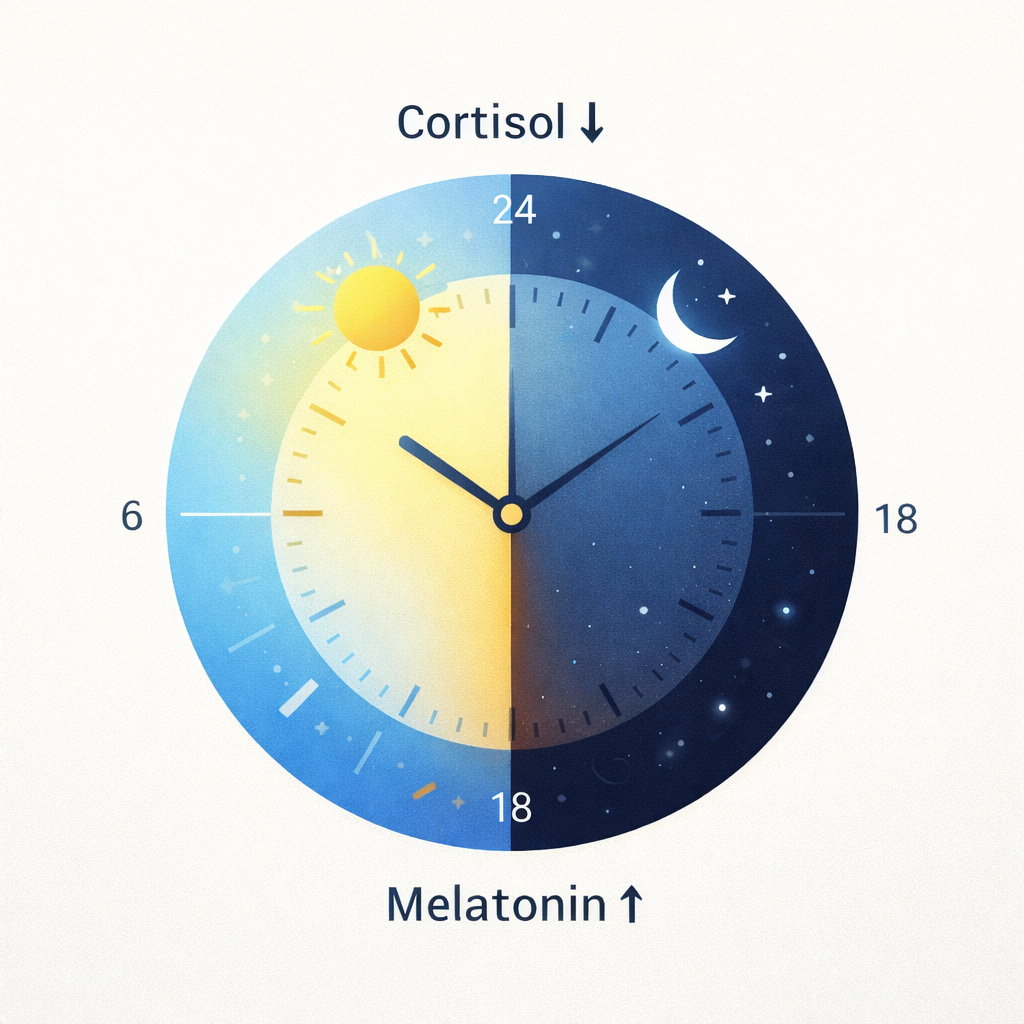
Your body follows a 24-hour internal clock known as the circadian rhythm.
This rhythm regulates:
- Hormone release
- Core body temperature
- Inflammation levels
- Sleep–wake timing
These shifts are healthy and necessary for sleep. But they can also influence how pain is perceived.
In the evening:
- Cortisol levels decline
- Melatonin begins to rise
- Core body temperature drops
Cortisol plays a role in modulating inflammation and stress responses. As levels naturally decrease at night, the body’s pain-buffering effect may also decrease.
Research has shown that pain sensitivity can fluctuate across the day, often increasing during nighttime hours. This does not mean nerve damage worsens at night — it reflects changes in how the central nervous system processes signals.
For someone with neuropathy, that shift can make burning or tingling feel more intense after dark.
3. Sleep Pressure Lowers Pain Tolerance

As the day progresses, sleep pressure builds.
This is the biological drive to sleep that accumulates the longer you are awake.
When sleep pressure is high — especially if you are already sleep-deprived — the nervous system becomes more reactive. Studies referenced by institutions like the National Sleep Foundation show that inadequate or fragmented sleep increases next-day pain sensitivity.
In practical terms:
- Poor sleep → heightened pain sensitivity
- Heightened pain sensitivity → more difficulty sleeping
- This creates a feedback loop.
Many people interpret this pattern as “my neuropathy is getting worse.” In reality, part of the increase may be related to sleep fragmentation lowering the pain threshold.
Understanding this distinction matters. It prevents unnecessary panic and helps you focus on improving sleep stability rather than assuming disease progression.
4. Body Position and Circulatory Shifts
When you lie down, several physical changes occur:
- Blood flow redistributes
- Pressure points shift
- Limb positioning changes nerve tension
In peripheral neuropathy affecting the feet or legs, these changes can influence symptom perception.
For example:
- Elevation changes vascular return
- Static positioning increases pressure on certain nerve pathways
- Even light sheet contact may feel exaggerated due to nerve hypersensitivity
This does not automatically indicate worsening nerve damage. It reflects how sensitive nerve endings respond to reduced movement and sustained positioning.
5. Anticipatory Stress Can Amplify Symptoms

After repeated difficult nights, the brain begins to associate bedtime with discomfort.
This anticipation can activate the sympathetic nervous system — the body’s alert system.
Increased sympathetic activity can:
- Raise muscle tension
- Heighten sensory awareness
- Increase perceived pain intensity
- This is not “in your head.”
It is a learned protective response.
When the brain expects discomfort, it becomes more vigilant. That vigilance can make nerve sensations feel stronger.
Understanding this helps separate physiological amplification from structural worsening.
Bottom Line:
Nighttime intensification of neuropathic pain is usually influenced by:
- Reduced sensory distraction
- Natural circadian hormone changes
- Lower pain tolerance due to sleep pressure
- Position and circulation shifts
- Anticipatory nervous system activation
These factors affect how pain is processed — not necessarily how much nerve damage exists.
Understanding this distinction can reduce unnecessary fear when evenings feel harder.
If your nighttime pain changes suddenly — becomes significantly more intense, spreads rapidly, or is accompanied by new weakness or loss of sensation — it’s important to speak with your healthcare provider.
Most evening flare-ups are related to normal biological changes in pain perception. However, new or dramatic shifts in symptoms should always be evaluated.
In the next guide, we’ll focus on practical strategies to reduce nighttime discomfort.