
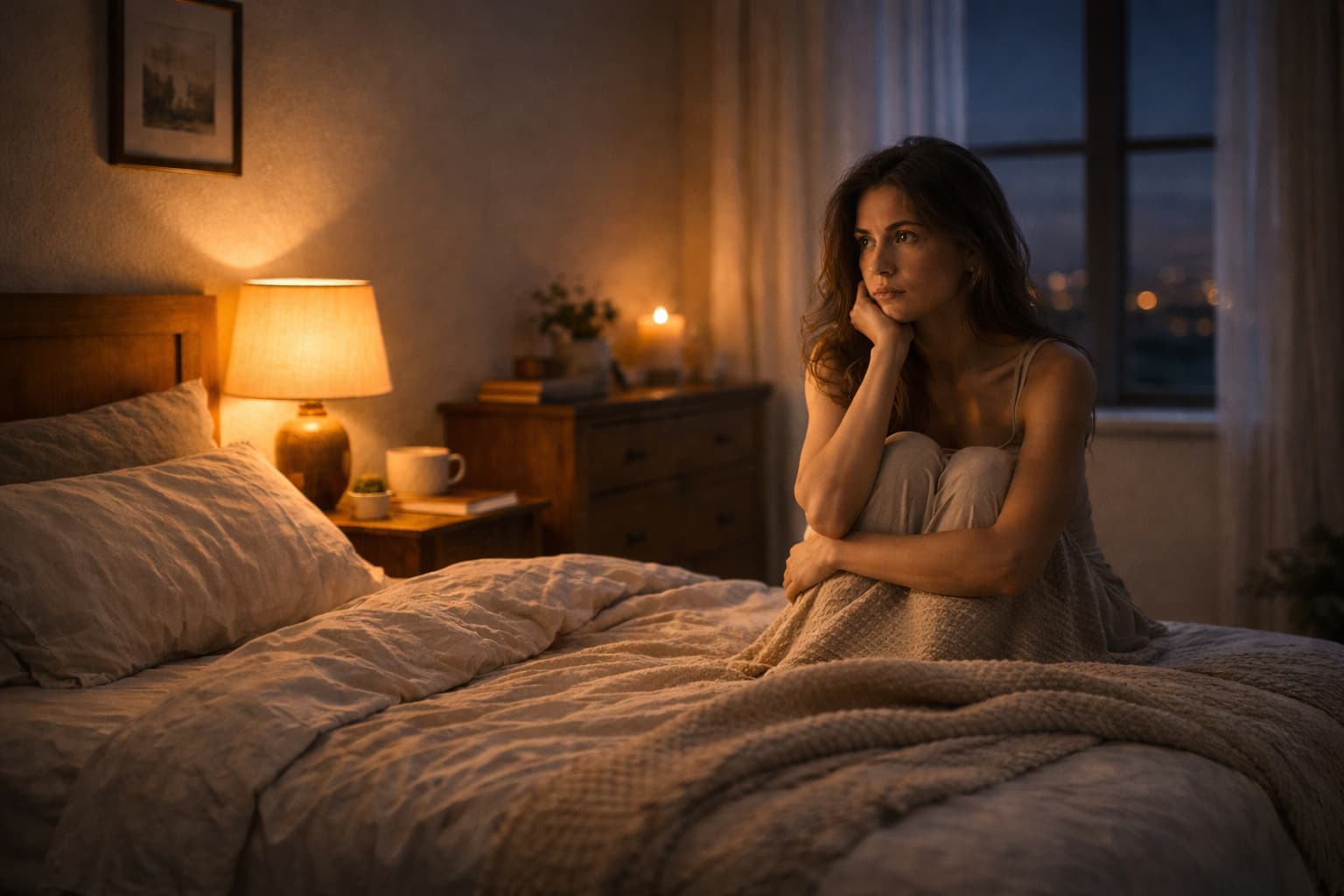
It’s late.
The lights are off, the house is finally quiet, and your body feels heavy in that familiar end-of-day way. You did what you were supposed to do — brushed your teeth, got into bed, closed your eyes.
And then… it starts.
Not a full-blown panic. Not a specific worry you can point to. Just a subtle tightness. A restless feeling in your chest. Thoughts that don’t race, exactly, but also don’t settle. You roll onto your side. Then the other. You wonder, Why now? I was fine all day.
If this quiet anxiety shows up only at night, you might even question whether it’s “real” anxiety at all. After all, you managed the day. You got things done. You held it together. So why does this uneasiness arrive the moment you’re finally trying to rest?
If this sounds familiar, you’re not alone — and you’re not doing anything wrong.
For many people, nighttime anxiety doesn’t announce itself loudly. It slips in gently, filling the space left when the day goes quiet. And while it can feel confusing and discouraging, there’s a reason it happens — and gentle ways to meet it without fighting yourself.
Let’s talk about what’s really going on, and how to help your body feel safe enough to rest.
This Isn’t “All-Day Anxiety” — It’s What Happens When Everything Finally Slows Down
During the day, your mind is busy solving problems, responding to messages, moving from one task to the next. Even if life feels stressful, there’s momentum. Distraction. Purpose. You’re doing what needs to be done.
At night, all of that fades.
The noise quiets, the to-do list pauses, and your nervous system is no longer focused on getting through the next thing. And in that stillness, something interesting happens: the emotions and tension you didn’t have time to process during the day finally have space to surface.
This is why nighttime anxiety can feel so confusing. It often isn’t linked to a specific fear or event. It’s more like a delayed response — your system saying, “Now that we’re safe enough to slow down, here’s what we’ve been carrying.”
This kind of anxiety doesn’t mean you’re anxious all the time. In fact, it’s often experienced by people who appear calm, capable, and composed during the day — the ones who keep things moving even when they’re under pressure.
At night, when the distractions fall away, your body finally gets a chance to speak. And it does so in the only language it has: sensation, emotion, and unease.
Nothing is going wrong here. Something is simply being felt.
Your Body Is Tired — But Your Nervous System Might Still Be On Guard
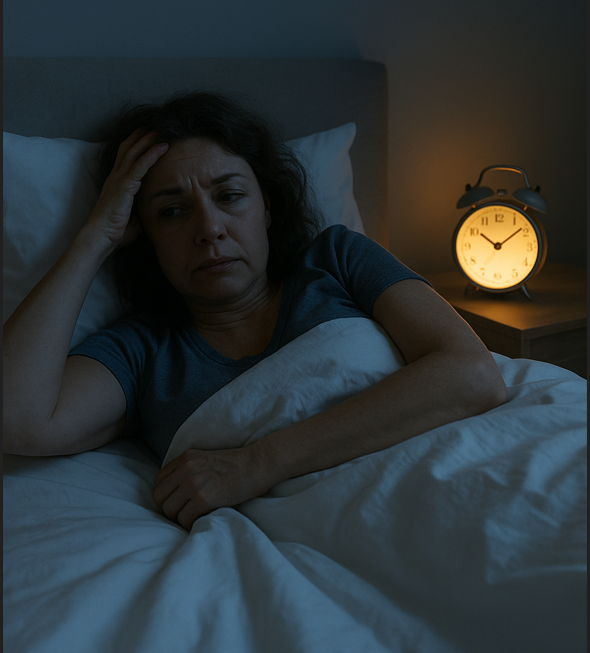
By the time you get into bed, your body is usually more than ready for rest. Your muscles feel heavy. Your eyes burn a little. There’s no doubt you’re tired.
And yet, something inside still feels alert.
This is because physical exhaustion and nervous system calm aren’t the same thing. You can be deeply tired while your system remains on guard, scanning for safety rather than settling into sleep.
When you’ve spent your days juggling responsibilities, making decisions, or holding yourself together emotionally, your nervous system learns to stay “on.” It becomes skilled at vigilance. At night, when there’s nothing left to focus on, that alertness doesn’t instantly switch off.
Instead, it can show up as subtle signals: a tight chest, shallow breathing, a sense of restlessness, or a feeling that sleep is just out of reach. Not because your body doesn’t want to sleep — but because it hasn’t yet received the message that it’s safe to fully let go.
This isn’t a flaw. It’s a protective response.
Your nervous system is doing what it learned to do: stay ready. The goal at night isn’t to force it into calm, but to gently show it that the day is over, and it doesn’t have to keep watch anymore.
Why Nighttime Anxiety Often Feels Vague, Not Logical
One of the most unsettling parts of nighttime anxiety is how hard it can be to pin down. There isn’t always a clear worry, a specific thought, or a problem you can solve. It’s just a feeling — a quiet unease that doesn’t seem to have a story attached to it.
At night, the parts of your brain responsible for logic, planning, and perspective naturally wind down. This is normal. But when anxiety shows up in that state, it often does so without words. Instead of thoughts, it appears as sensation: tension, heaviness, a sense that something is “off.”
Because there’s no obvious cause, your mind may start searching for one. What did I forget? What if something’s wrong? This search can accidentally amplify the discomfort, even though nothing new is actually happening.
It’s important to know that anxiety doesn’t need a clear reason to feel real. Nighttime unease isn’t a sign that something terrible is lurking beneath the surface. More often, it’s your nervous system processing the day in a quieter, less structured way.
Understanding this can soften the fear of the feeling itself — and that softness matters more than you might think.
Simple Ways to Settle Nighttime Anxiety (Without Trying to Make It Disappear)
When quiet anxiety shows up at night, the instinct is often to make it stop. To push it away, distract from it, or “fix” it as quickly as possible. But the nervous system usually settles more easily when it feels met rather than managed.
Instead of aiming for anxiety to disappear, try approaching it as something that needs softening.
You might begin with your breath — not by forcing deep inhales, but by gently lengthening your exhales. A slow, extended breath out sends a subtle signal of safety, telling your body that it doesn’t need to stay on high alert.
Grounding through the senses can also help. Notice the weight of the blankets, the temperature of the room, or the steady support of the bed beneath you. These small, physical cues anchor you in the present moment, where you are already safe.
If your thoughts feel unsettled, a quiet inner reassurance can be surprisingly effective. Something simple, like “I’m allowed to rest now” or “Nothing needs my attention in this moment.” You’re not trying to convince yourself of anything — just offering kindness.
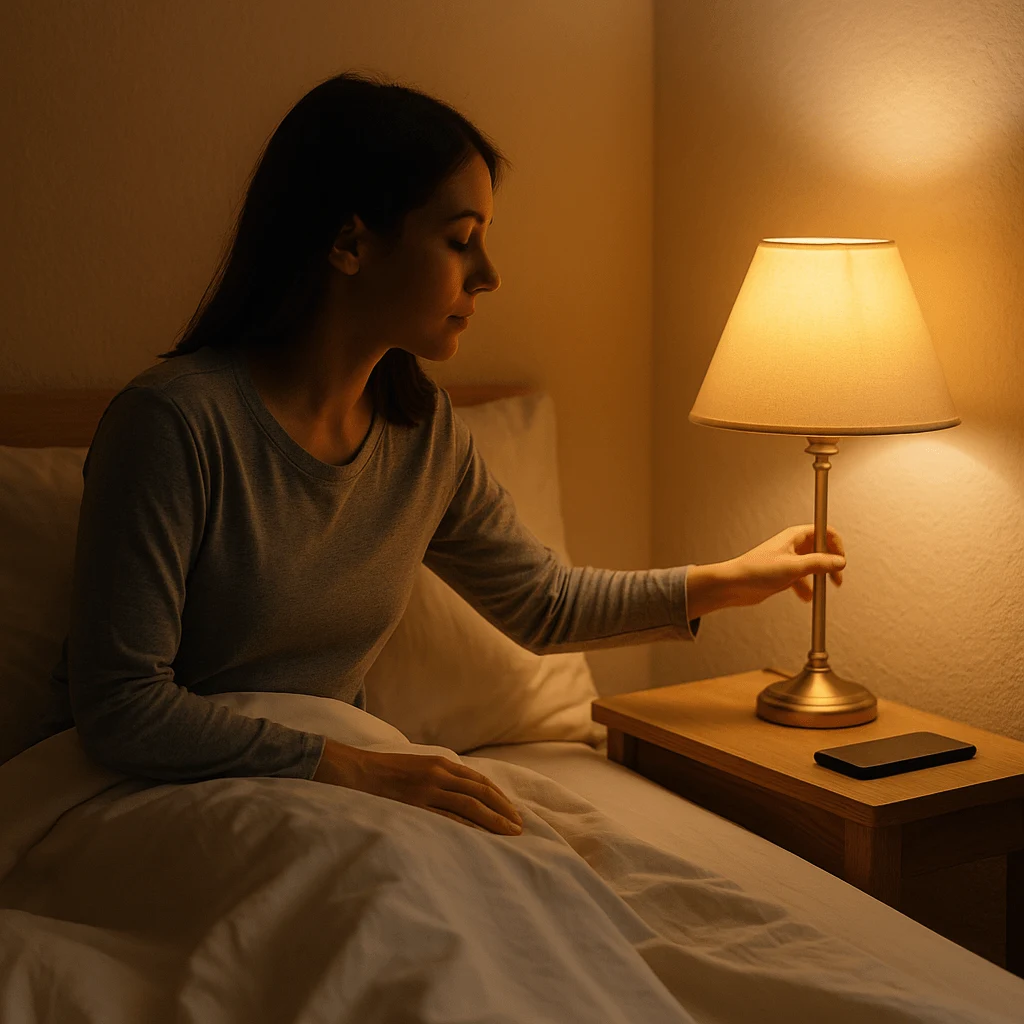
Soft, dim lighting in the hour before bed can also ease the transition. It signals to your system that the day is ending, without demanding immediate calm.
None of these are rules. They’re gentle invitations. Choose one, or none at all. What matters most is the tone you bring — patient, curious, and compassionate.
Related Posts:
- 8 Simple Sleep Habits That Support Better Rest and Energy
- Does a Shower Before Bed Help You Sleep Better?
- How Slow, Restorative Yoga Can Support Better Sleep
If Anxiety Still Shows Up, You Haven’t Failed
One of the hardest parts of nighttime anxiety isn’t the feeling itself — it’s the meaning we attach to it. When you try something gentle and the unease doesn’t fade right away, it’s easy to think, “I’m doing this wrong,” or “Why can’t I just calm down?”
But nervous systems don’t respond on command. They learn through repetition, consistency, and safety over time. The fact that anxiety still shows up doesn’t mean the night is ruined or that your efforts didn’t matter. It simply means your system is still learning that it’s okay to rest.
Progress with sleep rarely looks dramatic. More often, it’s quiet and gradual — a slightly easier breath, a shorter stretch of wakefulness, a moment of softness where tension used to live. These changes can be easy to overlook, but they count.
Instead of measuring success by whether anxiety disappears, try noticing how you relate to it. Are you meeting it with less frustration? Less fear? Even a little more patience?
That shift alone can make nights feel lighter, even before sleep fully returns.
Learning to Rest Without Fighting Yourself

If quiet anxiety visits you at night, it isn’t a sign that something is wrong with you. It’s often a sign that your system has finally found enough stillness to speak. What it’s asking for isn’t force or control, but reassurance.
When you understand that nighttime anxiety isn’t an enemy — just a response — it becomes easier to treat it with a little more kindness.
Each night you respond with a little more patience, you’re teaching your body something important: that the dark can be calm, that stillness can be safe, and that you don’t have to stay alert to be okay.
Sleep often returns quietly, in its own time. Sometimes it arrives before anxiety fades. Sometimes it comes because you stopped trying to chase it.
Either way, every small moment of kindness you offer yourself at night is a step toward deeper rest — even when it doesn’t feel that way yet.
💬 FAQs About Nighttime Anxiety
Why does anxiety only show up at night?
Nighttime anxiety often appears when the day finally slows down. During daylight hours, distractions and responsibilities keep your mind occupied. At night, when things grow quiet, your nervous system has space to process what it’s been holding. That unease isn’t a sign you’re anxious all the time — it’s often a delayed response to stress.
Can nighttime anxiety affect how well I sleep?
Yes, nighttime anxiety can make it harder to fall asleep or stay asleep, especially when your body feels tired but your nervous system is still alert. The goal isn’t to force sleep, but to help your body feel safe enough to rest. As that sense of safety grows, sleep often follows more naturally.
Is nighttime anxiety a sign of a sleep disorder?
Not necessarily. Many people experience nighttime anxiety without having a sleep disorder. It’s often linked to stress, emotional overload, or nervous system tension rather than a medical condition. If anxiety or sleep difficulties feel overwhelming or persistent, it can help to speak with a healthcare or mental health professional for personalized support.
What’s one gentle thing I can do when nighttime anxiety shows up?
Start by doing less, not more. Try noticing your breath as it naturally slows, or feel the weight of your body supported by the bed. Quietly remind yourself that nothing needs your attention right now. Small, calming cues like these can help nighttime anxiety soften without turning bedtime into another task to manage.